
Introduction
Strengthening governance within the NPOs sector is not just about compliance, it is about building transparency, accountability and resilience to ensure that organisations can continue to serve communities with integrity and impact.
In response to South Africa’s grey listing by the Financial Action Task Force (FATF) in 2023 due to significant gaps in its Anti-Money Laundering and Counter-Terrorist Financing (AML/CFT) framework, there has been a national call to strengthen governance and compliance across all sectors, including civil society.
Among the 22 strategic deficiencies identified, the FATF highlighted the vulnerability of Non-Profit Organisations (NPOs) to be used as a conduit for terrorist financing, prompting the need for targeted reforms and capacity building. In alignment with FATF Recommendation 8, the Health and Welfare Sector Education and Training
Authority (HWSETA) launched a strategic initiative to support NPOs and NGOs in enhancing governance, risk management, and regulatory engagement.
JPS Africa NPC, a committed advocate for purposeful and transparent governance, responded to this call by developing and delivering a comprehensive training programme aimed at empowering NPOs to meet compliance expectations and contribute meaningfully to national reform efforts.
Problem Overview
South Africa was placed on the FATF grey list in 2023 due to concerns over its efforts to combat money laundering and terrorist financing. The FATF assessed that South Africa had significant gaps in its regulatory framework for preventing financial crimes. It identified twenty-two strategic deficiencies in the country’s Anti-Money Laundering and Counter-Terrorist Financing (AML-CFT} framework. These gaps were based on a Mutual Evaluation Report conducted in 2021 and formed the basis of an Action Plan, South Africa had to implement to be removed from the grey list.
The grey listing means that South Africa must improve its financial regulations and demonstrate progress to be removed from the list. This status can impact on the country’s international business and investment environment.
The Financial Action Task Force, which is an intergovernmental organization, founded in 1989 by the Group of Seven (G7) countries (Canada, USA, UK, Italy, Germany, France, Japan) with the primary goal of setting international standards and promoting effective implementation of legal, regulatory and operational measures for combating Money Laundering (ML) and Terrorist Financing (TF). FATF’s mission is to protect the international financial system from these illicit activities by creating comprehensive frameworks and encouraging global cooperation. It has evolved into a crucial body for maintaining the integrity of the financial system.
The FATF identified Non-Profit Organisations (NPOs) as potentially vulnerable to misuse for terrorist financing, especially those operating in high-risk areas. Under Recommendation 8, countries must assess the risks and implement proportionate safeguards without disrupting the legitimate work of NPOs. The FATF flagged inadequate oversight of NPOs prompting reforms to improve risk assessment and regulatory engagement. HWSETA initiated a drive to reform and assist NPOs aiming at strengthening governance, risk and assessment practices and enhancing regulatory engagement in alignment with FATF standards.
HWSETA Training:
Governance for NPOs and NGOs Activity Description
The HWSETA training on Governance for NPOs and NGOs in South Africa’s, initial phased opened during October 2024. Eligible service providers (NPOs and NGOs) were to submit a proposal detailing the approach in addressing identified South Africa’s shortcomings under the Financial Action Task Force that led to South Africa’s grey listing.
JPS Africa NPC, an organisation committed to purposeful, clean and transparent governance, firmly believed it can make a meaningful contribution by sharing its knowledge, skills and experience decided to apply for the HWSETA grant.
The team at JPS Africa initiated the proposal development process led by Algernon Adonis, Finance Manager, under the supervision and guidance of Ida Asia, Managing Director. Lu-Anne Malony, HR Officer, administered the process with support from Basetsana Makena, Strategic information Unit Assistant, while Wentzel Kruger, Senior Strategic Information Unit Manager, developed the Monitoring and Evaluation plan. Douglas Mambera, Chief Financial Officer, was responsible for financial calculations, projections and finalization of the project budget. Final review of the proposal as well as quality assurance were done by Vusi Mahlangu, Chief of Party and Ida Asia approved for final submission.
During December 2024 JPS Africa NPC received a conditional approval letter for the training of 25 participants from various NPOs situated in Pretoria. In January 2025 a second conditional! approval letter was received for the training of 9 NPOs/NGOs constituting of 36 participants to be trained.
Between January 2025 — February 2025 with the guidance from Kholofelo Malapane, the HWSETA Provincial Officer identified 9 NPOs in Hammanskraal. These included managers and staff of non-profit organisations, compliance officers, risk management professionals, NPO board members and financial auditors in the Non- Profit sector.
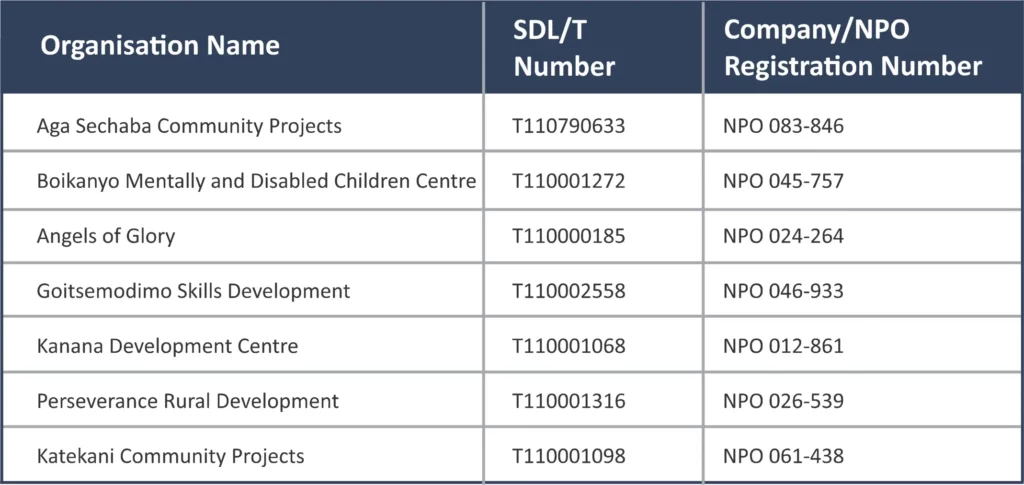
Table 1: List with Participating Non-Profit Organisations
In preparation for the training on Governance for NPOs and NGOs, Algernon Adonis, Finance Manager at JPS Africa, developed the training manual, which was subsequently reviewed and amended by Bennett Asia, Senior Technical Advisor. Foilowing final approval and submission, Ida Asia, Managing Director, collaborated with graphic designer ClearCreative to develop the participant manual and slide deck. This collaboration resulted in a professionally compiled training pack featuring a clear and concise layout, complemented by a cohesive and visually appealing cover page.
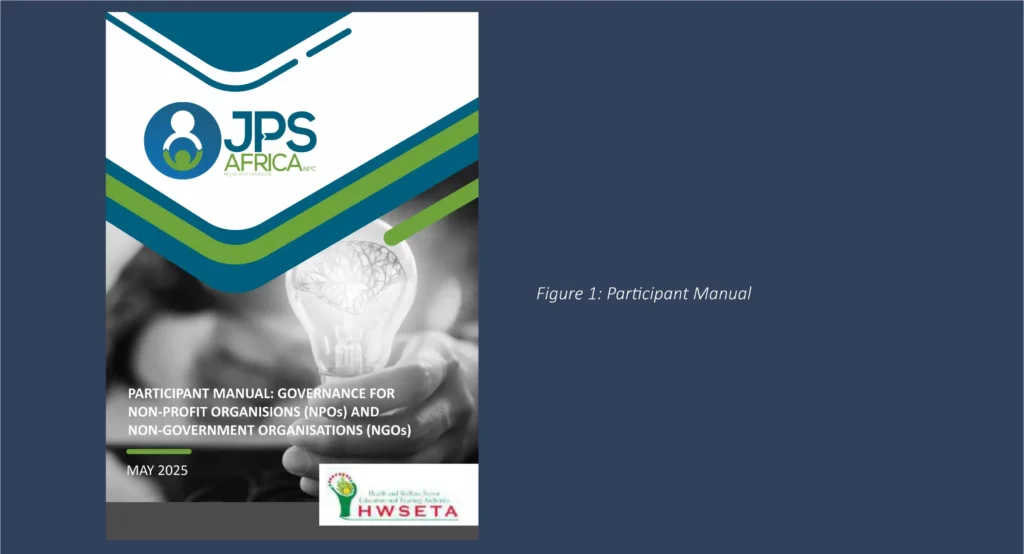
JPS Africa’s Logistics Unit efficiently coordinated all training and travel logistics for participants attending the Governance for NPOs and NGOs two-day training. The training was held from 29 to 30 May 2025 at Protea Hotel Fire & Ice, Menlyn, Pretoria. Over the two-day session, the course focused on strengthening governance, risk management, and compliance within the NPO and NGO sectors. The curriculum was structured into seven key modules as per the Course Agenda below.
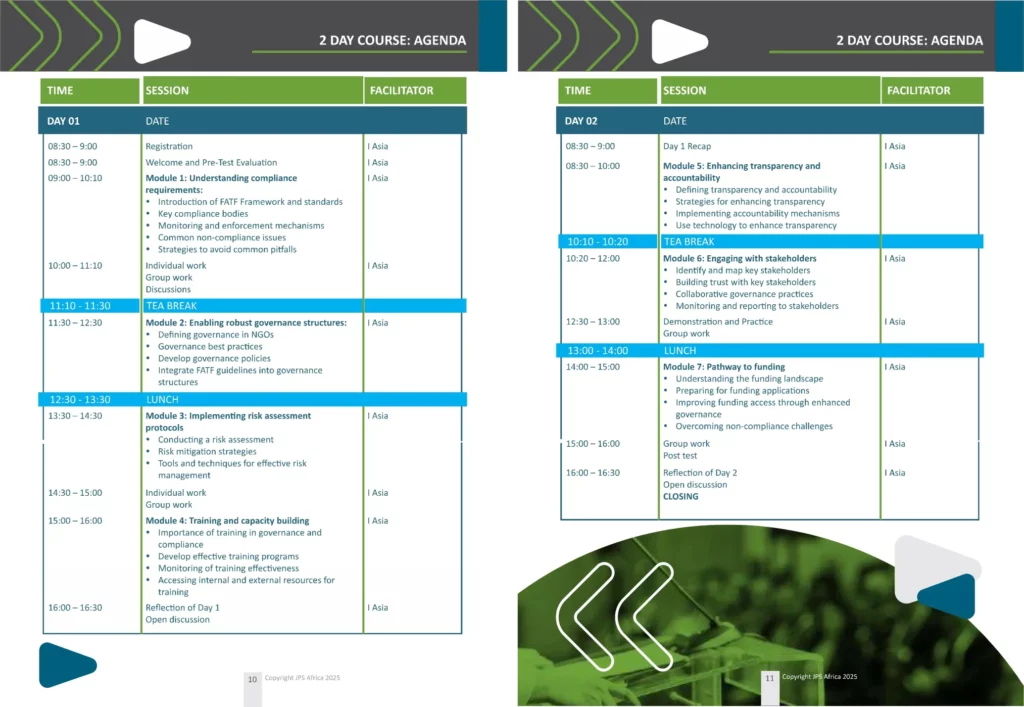
Figure 2: 2 day Course Agenda
The course was conducted using the following teaching and learning methods:
- Facilitator led Face-to-Face Lectures;
- Pre & Post Test;
- Case studies;
- Large-and small-group work and discussions;
- individual work; and
- Demonstration and practice.
JPS Africa NPC played a crucial role in supporting the training on behalf of HWSETA on Governance for NPOs and NGOs initiative by providing expertise, developing training materials, facilitating the training and providing participants with logistical support to ensure the successful execution of the program.
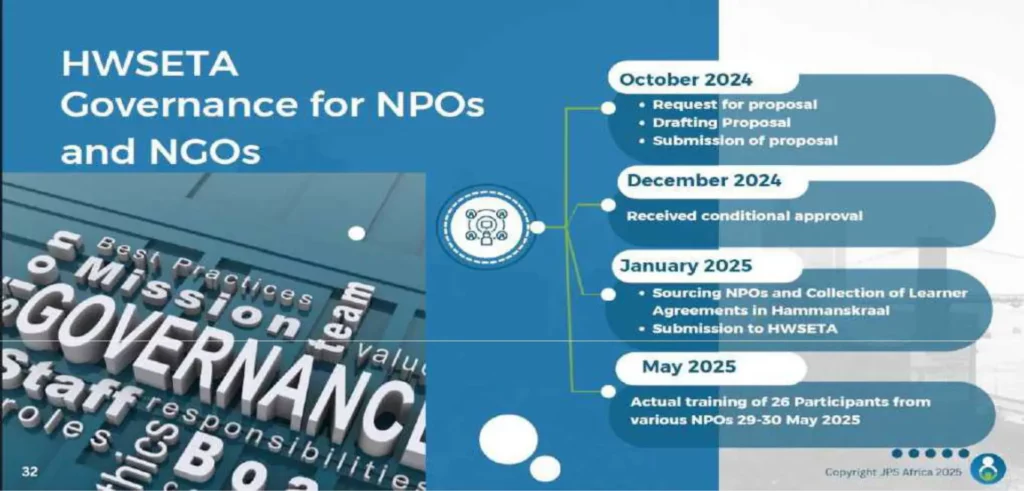
Figure 3: Roadmap to HWSETA Conditional Grant
HWSETA Training Outcomes
JPS Africa NPC successfully implemented and executed a two-day, face-to-face training programme on Governance for NPOs, in alignment with the approved HWSETA workplan. The training emphasized the importance of purposeful and transparent governance, reinforcing JPS Africa’s commitment to ethical leadership within the nonprofit sector. A key focus of the programme was to deepen participants’ understanding of the Financial Action Task Force (FATF), its global role and the implications of South Africa’s grey listing status. Through this initiative, JPS Africa empowered NPOs with the knowledge and tools necessary to strengthen compliance, enhance accountability, and contribute meaningfully to national reform efforts.
The Governance for NPOs and NGOs training, delivered in partnership with HWSETA and JPS Africa NPC resulted in measurable shifts in institutional behaviour, policy implementation, and compliance orientation among participants. Rather than just raising awareness, the program enabled concrete actions such as updated governance frameworks, adoption of risk protocols, and improved readiness for donor engagement. These early indicators suggest that with continued support and follow-up, participating organisations are now structurally better equipped to meet the compliance and governance expectations that prompted the FATF grey listing. Their progress reflects a tangible movement toward a more accountable and transparent NPO sector in South Africa.
Participant Demographics
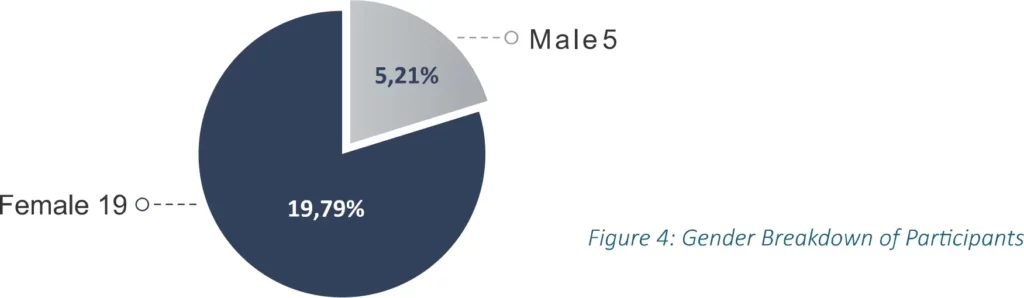
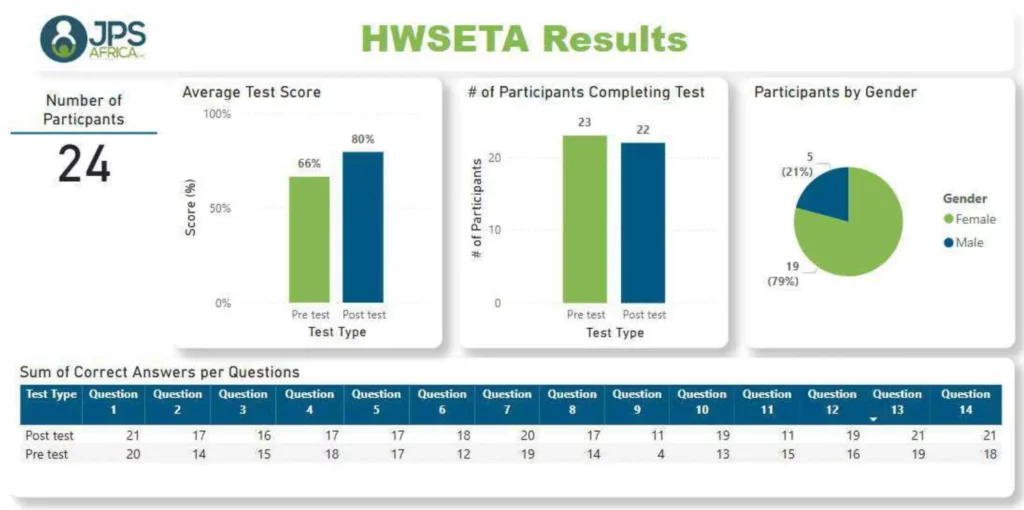
A total of 24 participants attended the training. Below is a breakdown of participants by gender.
Conclusion
In response to South Africa’s grey listing by the Financial Action Task Force due to systemic gaps in anti-money laundering and counter-terrorist financing frameworks, the Health and Welfare Sector Education and Training Authority launched a targeted training program on Governance for NPOs and NGOs. The initiative, rolled out in phased approvals from October 2024, aimed to equip civil society organisations with the necessary skills to meet governance, risk and compliance expectations aligned to FATF standards.
The two-day training, held on 29-30 May 2025 at Protea Hotel Fire and Ice Menlyn, focused on seven core modules covering compliance frameworks, governance structures, risk assessment, capacity building, transparency, stakeholder engagement, and improved funding access. Through interactive learning methods, the course provided both theoretical foundations and practical tools to embed governance best practices in participating organisations.
Key stakeholders included HWSETA various NPOs/NGOs and JPS Africa NPC. JPS Africa NPC’s role extended beyond facilitation, offering technical guidance, logistical coordination and expertise in course development and execution.
The initiative successfully built capacity within the nonprofit sector, addressed FATF-identified gaps, and positioned the participating organisations to become more compliant, transparent and fundable in the evolving regulatory environment.
“The training is perfect – from the training venue to the excellent training manual”
Kholofelo Malapane. HWSETA Officer
“I have never attended a physical training event by a service provider where everything was in place – from the participants and facilitator to the training material and venue”
Nthabiseng Morenammela, Auditor, Office of the auditor General
