
The 10-year review of JPS Africa focused on the evolution of the Medical Male Circumcision (MMC) program’s impact on HIV prevention and the human connection, exploring how our platforms have shaped relationships, communication styles and perceptions of stakeholders over a decade. This approach allowed for a rich exploration of personal experiences, behaviours, and shifts within the MMC landscape over a decade (2015-2025).
Focus group discussions and stakeholder interviews were conducted in English using a structured interview schedule with open ended questions and moderated by an
independent consultant. The interviews were video and audio-recorded and transcribed. The results were analysed thematically using phenomenographic data analysis procedures and published as part of the Medical Male Circumcision 10-year review report.
An awareness of stakeholder’ perceptions and understanding of the evolution of JPS Africa’s MMC program over a decade has important programmatic implications in terms of the education and training of MMC service providers and focused on the identified primary customer — the course participant / trainee and implementing
partner, to ensure clinical proficiency with subsequent quality and safe service provision. Longevity of the leadership team contributed to stability in a volatile, uncertain, complex and ambiguous donor landscape and increased donor confidence in the organisation over the past decade.
JPS Africa introduced a cost-efficient human resources model which facilitated transparency and open communication. Our collaborative partnership with Implementing Partners was based on principled engagement, shared motivation and joint capacity. JPS Africa introduced an unique HR model working through Implementing Partners vs executing the programme form the Pretoria office. Thus, contributing to reduced HR costs and creating economic value in provinces though empowerment and capacity building offered to Implementing Partners.

Background
There is compelling evidence that MMC reduces the chances of heterosexual transmission of HIV infection. Healthcare workers are among the key influencers in terms of the scale-up of MMC as they are often involved in mobilisation for uptake and direct service delivery. There is a paucity of qualitative research on stakeholders’ experiences, understanding and perceptions of MMC in the South African primary healthcare context.
This 10-year review was conducted to determine JPS Africa stakeholders’ perceptions and understanding of our MMC program over the last decade. It included a desktop review, qualitative focus group discussions with three groups of employees — more than 10 years with the company (Managing Director, Chief Financial Officer, Chief of Party and the Logistics Manager, two groups employed less tan 10 years (Managers and Officers within respective Units and the junior staff grouped together).
JPS Africa’s Business Model as applied to the Voluntary Medical Male Circumcision landscape and integrating reporting with focus on the primary customer (the trainee and resource allocation) to enhance value creation in the six capitals (finance, manufactured, intellectual, human, natural and social and relationships).
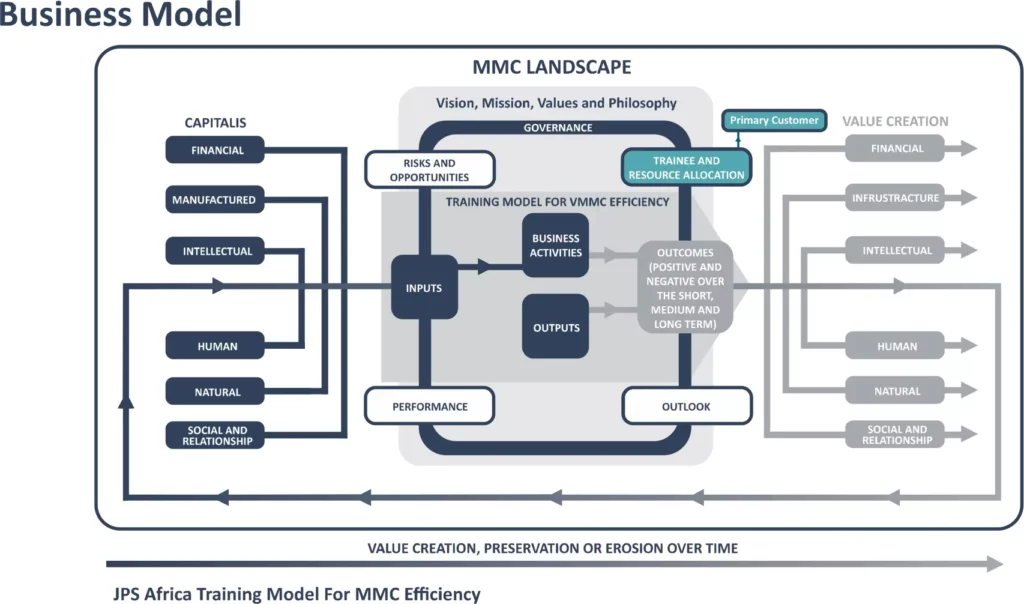
JPS Africa is celebrating its 10-year cycle of independence as a Non-Profit Organisation and it’s for this reason that JPS Africa has embarked on conducting a 10-year MMC program review. Interviews were conducted with various stakeholders including Focus Group Discussions with employees.
A total of 38 participants were engaged to gather information over a two-month project period. The Focus Group Discussions employed a qualitative approach using a phenomenographic format. Nineteen (100%) JPS Africa employees at different levels participated in three focus group discussions. In addition, qualitative interviews were conducted with the three Non-Executive Board Directors, one member of Jhpiego leadership team, one ex-Director MMC, Jhpiego (now employed by Johns Hopkins University) two representative of funders (National Treasury and Centres for Disease Control), Four Department of Health (National, Provincial and District levels — Programmatic and Finance) officials, three Implementing Partners, Chairperson of Ingoma Forum (Cultural Male Initiation) and four Service Providers respectively.
These stakeholders working in three provinces (Western Cape, Gauteng and Mpumalanga) in South Africa over the decade under review, were interviewed in English using a structured interview schedule. The interviews were audio-recorded, and transcribed. The results were incorporated, analysed thematically using phenomenographic data analysis procedures and incorporated into the JPS Africa 10-year Medical Male Circumcision Programme Review Report.
Problem Overview
JPS Africa is proudly celebrating it’s 10-year milestone as an independent non-profit organisation.
Following almost a decade of close collaboration and capacity building by Jhpiego, JPS Africa has finally transitioned into a fully-fledged independent, self-sustaining entity on the 15th of October 2015.
We are in a concurrent process of rebranding and repositioning the company to facilitate diverse income streams. This would be a second-generation branding, redirection and expansion of services and a first ever review of the JPS Africa MMC programme since separation from Jhpiego.
JPS Africa, whose skills and principles are grounded in the Jhpiego competency-based approach, remained a Jhpiego preferred partner working throughout South Africa on important public health matters. This unique working relationship between the two organisations allowed JPS Africa to build on the strong global reputation of Jhpiego to establish and envisage expanding its programmes across Southern Africa and eventually Africa. Very few, if any local entities survived separation from global organisations and this is indeed a success story to tell for both Jnpiego — having laid the foundation and JPS Africa demonstrating resilience to not just surviving the separation but established itself as a “go to MMC partner” in the landscape.
As we aspire to be the “go to MMC partner” in the landscape, we offer an online MMC Micro Learning Toolkit, embarked on the Objective Structured Clinical Examination (OSCE), a first of it kind for a not-for-profit company as well as the Management and Leadership Coaching programme. JPS Africa Implements best practices and implemented the new National MMC Guideline (2025). All these are addressed in a timely manner to achieve excellence in MMC training to serve the needs of our primary customer by offering and ensure proficiency in service delivery.
“IPSA is a big fish in a small pond. Very niched, focus on VMMC. The leadership provided by MD Ida Asia.
Big commitment to develop staff. Integrity, financial reporting and transparency. JPSA has zero
tolerance for fraud and corruption. They are just bloody good at what they are doing”.Dr GG Wolvaardt, Non-Executive Board Chairperson
Prior to the Jnpiego-JPS Africa separation, the new Business Development unit led by the Managing Director actively commenced with fundraising initiatives in 2013, independent of Jnpiego as depicted in the Funding Roadmap 2009 -2025.
JPS Funding Roadmap 2009 – 2025
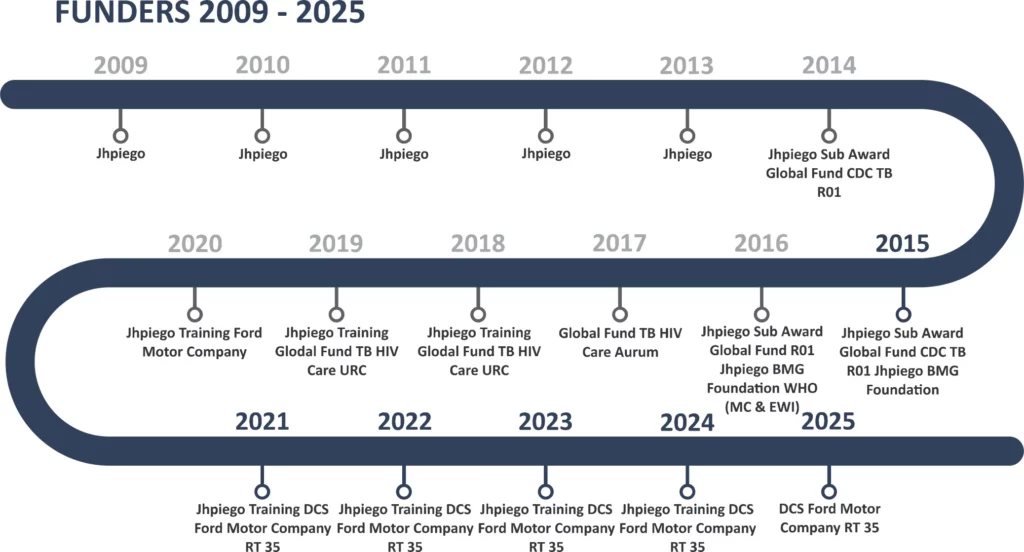
Figure 3: JPS Africa Funder Roadmap 2009 – 2025
JPS Africa has become financial sustainable post separation through different funding mechanisms and successfully performed close to 450,000 safe circumcisions over the past decade.
The VMMC program is a cost-effective way to drive HIV prevention in South African communities, with a reported 60% decline in female-to-male HIV transmission rate. The National Department of Health reports that over 6.2 million VMMCs have been performed across South Africa over the past 15 years. The VMMC program is active in all nine provinces and more than 27 districts, supported through both donor and National Treasury funding.
Within this national effort, JPS Africa has made a significant contribution of 420,000 circumcisions—representing 7% of the total. This achievement is particularly notable given the highly competitive implementation landscape, which includes 10 prime partners under the RT35 funding program as well as several other donor-funded organisations.
JPS Africa’s impact has grown steadily over time, expanding its operational footprint from just one district in a single province to five districts across three provinces (Gauteng, Mpumalanga and Western Cape) in the current program cycle. This trajectory highlights JPS Africa’s role as a key partner in advancing the national VMMC agenda and strengthening the health system through scale, reach, and sustained delivery.
“IPS Africa has positioned itself as a very prominent player in the VMMC landscape.
Instrumental in program implementation as the program evolved and play a very important role”
Mr Peter Vranken, Senior Program Officer, Centers for Disease Control and Prevention.
As part of this journey, we conducted a qualitative review to reflect on our accomplishments, challenges, progress and impact to further strengthen our services in the Medical Male Circumcision landscape in South Africa.
Project/Activity Description
We commenced with the appointment of a 10-year Review Committee with the following members:
- Ida Asia, Managing Director (Chairperson)
- Douglas Mambera, Chief Financial Officer
- Vusi Mahlangu, Chief of Party MMC
- Wentzel Kruger, Sr Strategic Information Manager
- Bennett Asia, Sr Technical Adviser: Education and Training (Moderator)
- Algernon Adonis, Finance Manager/Company Secretary (Scribe)
A detailed questionnaire has been developed for this purpose and the employees were divided into three groups for ease of conducting the focus group discussions and interviews. All questions were open ended which were complemented by probing/prompting questions where necessary.
We appointed a Psychologist/Researcher, an experienced, independent, international consultant, Dr Cynthia Geary, to lead the 10-year review supported by a local independent consultant, Mr BJA Asia, as moderator for the focus group discussions and qualitative interviews. The project was monitored, recorded and progress evaluated by the 10-year review Committee. Interviews were conducted with various stakeholders including Focus Group Discussions with staff of JPS Africa.
The moderator used a phenomenographic approach, for exploring the different ways the interviewees (stakeholders) experienced or understood the particular phenomenon – in this case, the JPS Africa Medical Male Circumcision programme.
“I observed Mr Asia and took note of how he used probing questions. I was nervous but
prepared well and enjoyed this experience and learnt something new.
This activity pushed me outside my comfort zone”.
Algernon Adonis, JPS Africa Finance Manager/Company Secretary

Picture 1: Mr A Adonis conducted Face-to-Face interview with Mr D Loylissoonal, NDoH
“| think one thing we are doing currently, that is good enough for. We would like to see JPS Africa continuing the good work they are doing. As part of the part this cohort and program, things are changing, we would like to see them as the important stakeholder, as ensuring that we meet our targets. To continue training and build and increase enough capacity to fill the program. The program meeting more regularly in terms of updates and discussing success, challenges and how JPS Africa can really contribute significantly to the national program, Currently JPS Africa is doing a lot for us. We should be appreciative and thankful that JPS Africa is an important entity within the VMMC space”.
Mr D Loykissoonlal, Programme Manager: Men’s Health/National VMMC, Pretoria
The moderator skilfully probed without leading and created a space where participants felt comfortable to share experiences and views.
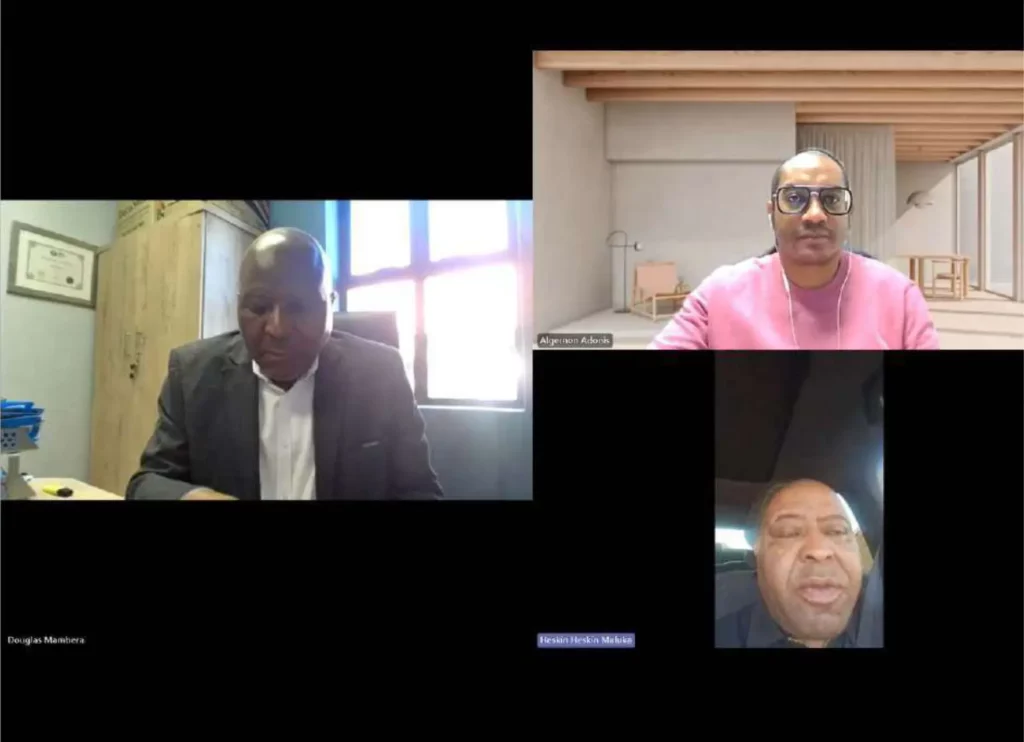
Picture 2: Mr A Adonis conducting virtual interview with Mr H Maluka, MPDoH
“The organization encourages learning through training. They do training for MMC and other related trainings. JPSA communication is very good. Able to reach out to everyone through electronic media, word of mouth. They also reach out to Chiefs and Traditional Councils. JPSA has helped to produce performances of high quality. We are confident in that JPSA recruited implementing partners who are focused to deliver and meet the set targets. They are over performing. The relationship has been quite good so far”.
Mr Heskins Maluka, Director: ACSM- Mpumalanga Department of Health
Interviews were recorded for ease of documenting and having a record. Participants were requested to sign a consent form for the recordings to be done. The interviews were conducted during July to September 2025 and concluded on 5 September 2025.
Three focus group discussions were conducted by the Mr BAsia with:
- Group one: employees with the organisation for a period more than ten years. This group included the Managing Director, Chief Financial Officer, Chief of Party MMC and Logistics Manager;
- Group two: employees with the organisation for a period less than ten years. This group included the Senior Strategic information (SIU) Manager, Monitoring and Evaluation Manager (M&E), Clinical Managers/Master Trainers/Mentors, Finance Manager, HR-, Finance-, Logistics Officers; and
- Group three: employees with the organisation for a period less than ten years. Senior Internal SIU-, internal Audit-, M&E-, Finance, Training-, Quality Assurance-, Al and Social Media Assistants, Hygienist and Interns.
The Focus Group Discussions identified categories of description that reflected the varied understandings and perceptions of JPS Africa employees. These were shaped by the level, duration and position of employment.
In addition to the three focus group discussions, individual interviews were conducted. The Structured Interviews used open-ended questions to explore participants’ experiences and conceptions. The Moderator at times probed for depth and variation but avoid leading questions.
The following people participated
- Non-Executive Board members: Dr GG Wolvaardt, Non-Executive Director & Board Chairperson; Dr R Geary, Non-Executive Director; and Mr E Brink, Non-Executive Director.
- Jhpiego: Harshad Sanghvi, Senior Medical Advisor.
- Funder: MrP Vranken, Senior Program Officer, Centers for Disease Control and Prevention.
- National treasury: Manthepeng Tshinavha, Director transversal programmes.
- National Department of Health: Mr. D. Loykissoonlal, Men’s Health/Medical Male Circumcision Programme Manager.
- Provincial/District Department of Health: Pierre Du Plessis, Senior State Accountant Western Cape, Josephine Beharrie, Finance manager, Mpumalanga.
- Service Providers: Stefan de Klerk, Outsourced IT, Dexani; Ludwig Bouwer, Sound Engineer, OneBigRoom Studio; Pieter von Wielligh, Videographer, HumanCave Studio; and Lizelle Willemse, Graphic Designer, ClearCreative.
- Implementing Partners: Heritus Mabelane, Mpumalanga; Elijah Ramonyai, Gauteng; and Meshack
Monakali, Western Cape. - Cultural Male Initiation: Musa Thugwana, Chairperson, Ingoma Forum.
- Other: Kelly Curran, Johns Hopkins University (ex-Jhpiego MMC Director).
The moderator viewed all videos and read transcripts multiple times to ensure he summarised and highlighted key expressions and meanings from each focus group discussion and interview. He looked for similarities, clustered and assigned meaning to those.
Project Activity/Outcomes
The Focus Group Discussion with employees and interviews conducted with stakeholders uncovered the qualitative variation in understanding among staff and other stakeholders, which is crucial for designing effective interventions and upliftment of staff. Interviews by Implementing Partners indicated their perception and experience partnering with JPS Africa.
“I am writing to express my sincere gratitude for the opportunity to have participated in the 10-Year Review of the JPSA MMC Programme. It has been a privilege to contribute to the organization’s work over the past decade. JPSA have groomed me to be the man I am today and all the achievements is because of JPSA”.
Mr. Heritus Albert, Implementing Partner, Mpumalanga
The Focus Group Discussions noted and recorded variation in experiences and ways in which the three groups understood the context of the MMC programme.
Thematic responses were as follow:
Group 1: Staff members demonstrated a high-level understanding, knowledge and interpretation of the vison, mission, strategic objectives and deliverables of JPS Africa. Their description and expression of the various variables and nuances which come with experience and a deep understanding of the relationship between strategic and operational interface. Exhibited a high degree of confidence and pride with the decision taken to separate from Jhpiego.
Group 2 exhibited a good understanding of the various operational responsibilities and activities. Staff has a good grasp of their respective portfolios. They demonstrated a sense of good collaboration between the various Units/Departments. Staff members also stated their satisfaction and association to be working at JPS Africa.
Group 3 was the most junior group and exhibited limited understanding of the broader context of the working environment of JPS Africa, however well versed in their respective portfolios. In addition, they exhibited a high degree of energy, commitment and positivity as well as trust and excellent working relationships.

Picture 3: Virtual interview conducted by Mr B Asia with Ms. M Tshinavha, NT
“I have been working with JPS Africa since 2016 as primary contractor on RT-35 contracts. They demonstrated very strong compliance and reporting standard. JPS Africa’s systems are robust and aligned, very effective and very efficient. JPS Africa is well experienced in the VMMC field, agile and quick to mobilize.
They have operational footprint, experienced clinical teams and community centred approach.
Ms Tshinavah asked the interviewer at the end of the interview as to his view of how JPS Africa can expand in future. The interviewer responded to say that JPS Africa has the capacity to expand in any related aspect of VMMC. This was a very fundamental question in that the interviewee is tuned into the trust and confidence she has in JPS Africa.
Ms. M Tshinavha: National Treasury – Director, Transversal Contracts

Picture 4: Virtual interview conducted by Mr A Adonis with Mr Pierre Du Plessis, Senior State Accountant, KESS Sub-Structure, Western Cape.
“IPSA operates within the guidelines stipulated within the PFMA (Public Finance Management Act). JPSA signed a Transversal Contract set up by the National Treasury.
“Utilising the RT35 is beneficial and relieves pressure on the substructure facilities. KESS can then focus on other areas. Majority of the KESS substructure business is carried out by the Non-Profit Organisations on their behalf. This takes a lot of burden from the Department”.
Mr Pierre Du Plessis, Senior State Accountant, Khayelitsha Eastern Substructure (KESS), Western Cape Department of Health
Key Expessions And Responses
Staff>10 Years
- Took right decision and that it resulted in a positive outcome which proved to be sustainable
- Believed that separation from Jhpiego was in the best interests of all concerned
- MDas driver was steadfast and supported by rest of Managers
- Noevidence of derailing the separation process
- High levels of positive energy and commitment
- Supporting the MD in achieving organisational goals