
Precision.
Excellence.
Impact.
JPS Africa’s definitive guide empowers healthcare professionals to set up and execute Objective Structured Clinical Examinations (OSCE) with confidence – ensuring mastery in the Medical Male Circumcision (MMC) programme for safer, high-quality care.
Introduction
JPS Africa provides quality and safe care to our customers while excellent MMC training and clinical services are paramount. Our mission is to passionately build and nurture the most compelling MMC training and service brand in the business. We foster a culture of innovation and excellence, driving workforce productivity and
professional growth.
The Value Proposition of the JSP Africa (JPSA) Education and Training Unit is multifaceted, focusing on enhancing both individual and organisational performance. Key aspects include:
- Deliver education that is aligned with real world needs.
- Improve performance and productivity.
- Improve employee engagement and retention.
- Facilitate skills development and upliftment.
- Enhance innovation and adaptability.
- Strategic business partner within the organisation.
The JPS Africa’s hybrid implementation model has become increasingly recognised as cost efficient and value add through the evidence based collaborative partnership approach. However, this can also risk expose the organisation if Implementing Partners (IPs) are not being managed effectively. The collaboration dynamics
between JPS Africa and IPs are based on principled engagement, shared motivation and joint capacity. Sharing experiences, approaches and ideas converged during the Quarter One reporting period, has led to continued inspiration and innovative programming. The dynamic interactions constitute a significant part of the outputs
generated during Quarter Two program execution including the execution of the OSCE.
Problem Overview
At JPSA Africa, our people are key in ensuring that we can achieve our strategic objectives and we therefore continue with our efforts to embed a diverse and inclusive high-performance culture that encourages ongoing development and growth within the MMC as HIV prevention programme.
The primary customer is the course participant or trainee.
JPS Africa needed a baseline for all implementing partners to be assessed prior to renewal of contracts for the new funding cycle, exposing all clinicians to the same, standardised tools during assessment.
We embarked on the OSCE, an innovative approach, as post-training assessment specifically to identify areas of weak performance, facilitating remedial action to correct deficiencies to ensure standardisation, quality and safety of our clients. Thus, identifying clinical gaps in clinicians and training needs within the MMC programme to facilitate refresher training to sustain proficiency of clinicians.
The OSCE can provide valuable information relating to whether training materials are adequate and course objectives are being accomplished. Thus, appropriate changes in the curriculum can be made to better address the needs of clinicians. The OSCE application will assist JPSA to adjust and/or edit the MMC Toolkit training materials and ensure quality and safe MMC services.
OSCE Activity Description
Designing an Objective Structured Clinical Examination (OSCE) required careful planning and attention to detail. Here are some key requirements we considered:
Clear Objectives were set for each station. We defined the specific competencies and skills that the OSCE aimed to assess. These assisted in creating relevance and focused stations as per the sequential steps in MMC.
Miller’s Pyramid of assessment (Miller 1990) was used to assess the Examinee in the demonstration of learning in the simulated environment (See Diagram 1}. The use of ‘Standardised patients’, allowed assessment of the Examinees’ actual performance during the OSCE, at the ‘does’ level of the pyramid. We were mindful of the fact that the simulated environment itself could influence the performance of Examinees in interpreting the results.
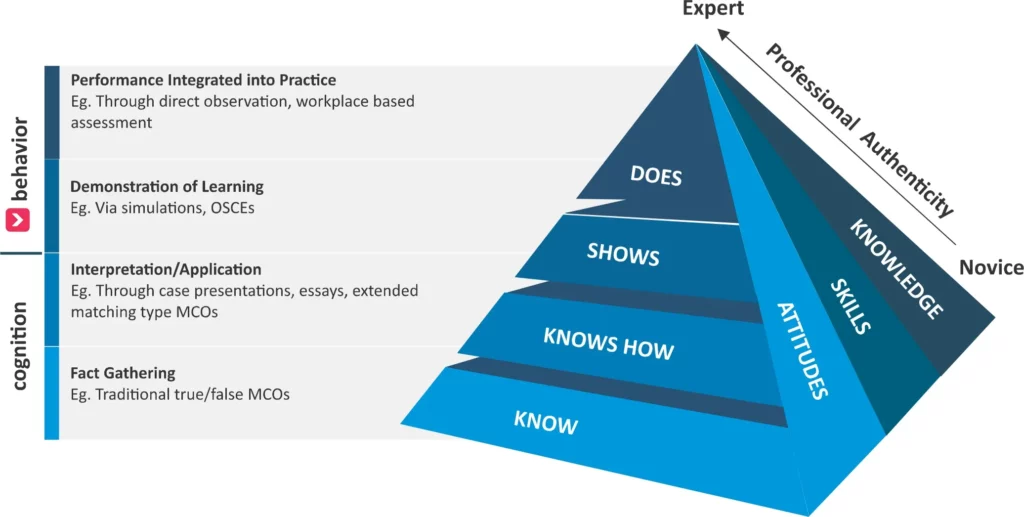
Diagram 1: Miller’s Pyramid
Staff of different Categories/Portfolios and across JPS Africa’s Units were selected and actively involved encouraging cross functionality and teamwork. We identified Examiners for each station with relevant expertise. Each station was manned by one or two Examiners who assessed the candidate’s performance of the required task and awarded a score based on predetermined and documented criteria in checklists. Inclusion of an Observer per station added to objective feedback.
Blueprinting. We developed a blueprint that mapped out the competencies that were assessed and ensured a balanced representation of different knowledge, skills and attitude areas. A Total of Sixteen Diverse Stations were designed: We created diverse and realistic clinical scenarios for each station aligned to the MMC
curriculum and practical requirements. The Senior Education and Training Technical Adviser, acted as Lead Examiner and ensured that each station had clear instructions, standardised patients (Station 1: History Taking and Station 14: Health Information and Station 15: Follow-Up) and a scoring rubric.
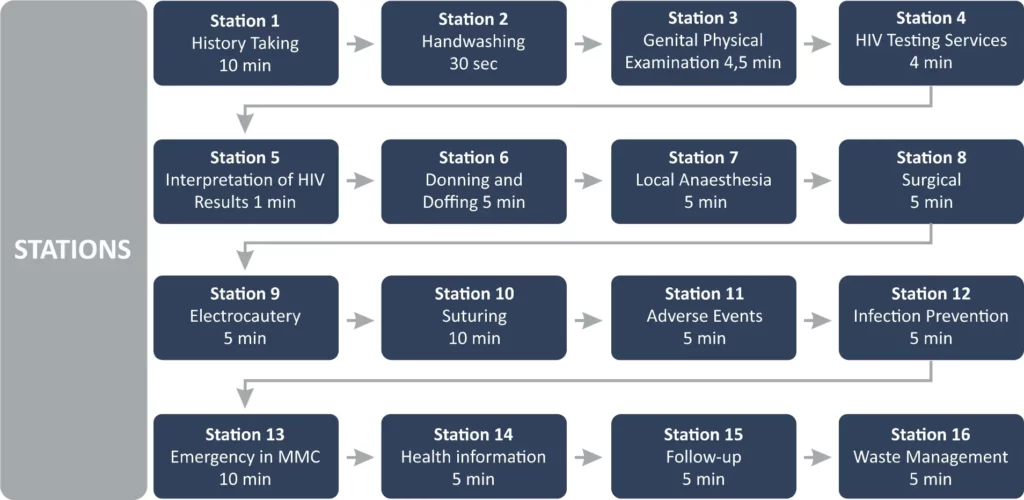
Diagram 2: OSCE Station Circuit
The MMC Circuit (above) represented the 16 stations. These followed the sequential steps of the Medical Male Circumcision procedure from History Taking (Station 1) to Waste Management (Station 16).
Each station was allocated the required staff (Examiners and Observers) according to the table depicted below.
The five Examinees were all trained and currently practising MMC clinicians. The OSCE consisted of sixteen stations, each representing a different clinical scenario and lasting between 30 seconds and 30 minutes respectively. These stations included demonstration, simulation and silent stations as well as couplets (See OSCE stations attached).
The Examinees rotated through these stations, where they were required to perform specific tasks within a set time frame. Each station was designed to test a particular skill or set of skills, such as history taking, physical examination, diagnostic reasoning, procedural skills and communication. Two standardised patients (trained to portray a real patient seeking MMC services) were used to simulate a clinical scenario.
The OSCE Roadmap
The OSCE Road Map was a structured process commencing with a briefing by the Managing Director (MD) and Chief of Party (COP). Detailed planning and preparation of OSCE grid commenced. The Examiner Checklists were developed in consultation with the COP and involvement of the Clinical Manager/Master Trainer who provided the timelines for the stations as per the clinical assessment requirements.


Diagram 3: The OSCE Roadmap
The scoring rubric included the stage one (novice) to five (expert), a brief description of the satges as well as the rating scale (1-5).
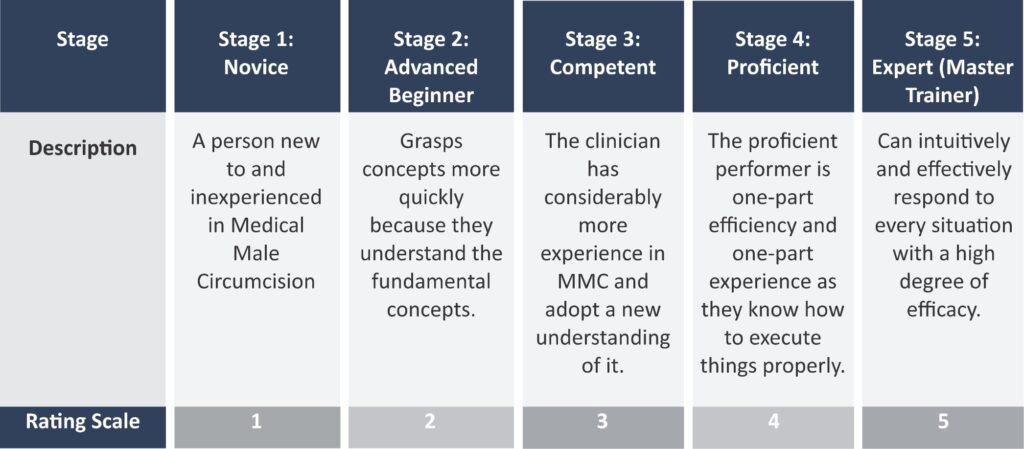
Table 1: Scoring Rubric
The rating scale further represented percentages (see below):

Table 2: Rating scale and percentages
The OSCE Outcomes
The OSCE was a resounding success. Everybody was tuned in, excited and motivated to see it through to its conclusion. The OSCE was very well planned and executed with no hiccups experienced. It was conducted in a professional clinical manner irrespective of it having been done outside of a clinical setting. All 16 stations were completed by the Examinees.
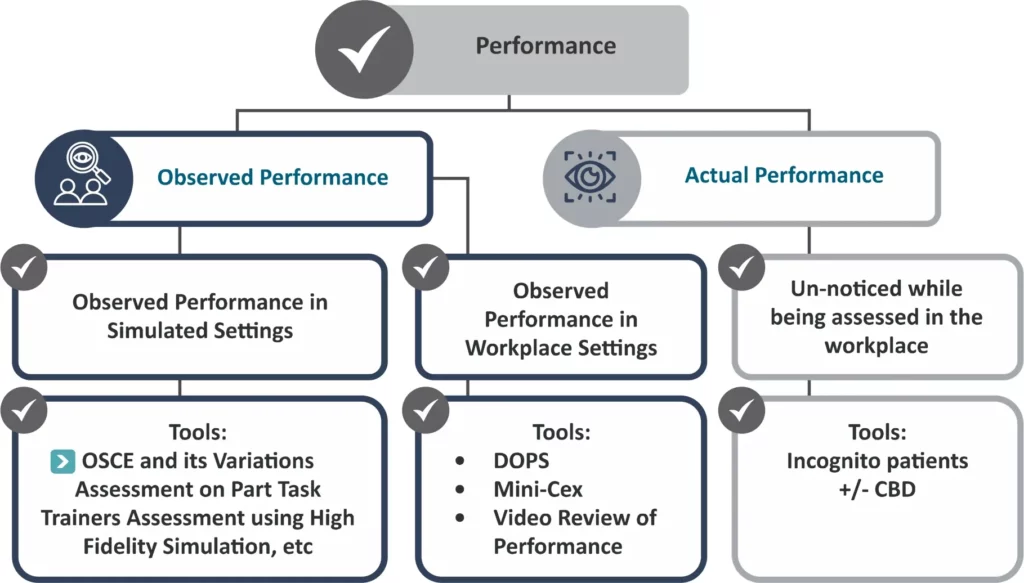
Diagram 4: Performance Management: Observed vs Actual Performance
This process has been institutionalised in JPSA whereby the OSCE became an important milestone in realising the relationship between professional growth and performance, with a further focussed programme of action to move towards actual performance as depicted above.
The OSCE was launched on the 14th of March 2025 and classified as observed performance. The outcome of this intervention allowed for gaps and training needs identification and will be complemented by assessment of actual performance in the clinical setting. It can also include un-noticed (unannounced) visits and assessment in
the workplace. This will happen within 4-6 weeks post OSCE.
The intervention on the 14th of March 2025 has been well documented and video recorded by a reputable company, The Big Room Studios in collaboration with Human Cave Studio to ensure a quality product for the purpose of continuous learning. The video can be viewed on our website www.jpsafrica.org This will include interviews by the Managing Director, Chief of Party and Sr Education and Training Technical Adviser as well as appreciation expressed by staff and implementing Partners on the day. The OSCE Guideline developed to guide the process can also be viewed on our website.
Conclusion
Proficient clinicians increase patient satisfaction and improve MMC clinical service delivery which enhances quality and safe care. Although clinicians and MMC clients appear to value communicative competencies differently, examinees are often evaluated solely by clinicians. This OSCE examined whether additional assessment of Clinicians by Non-clinical Examiner, Observers and the use the use of ‘standardised patients’ (SPs) was useful to gather additional information to address knowledge, skills and attitude gaps and training needs of the clinician.
The OSCE confirmed that the decision taken for this innovative intervention was justified. The feedback expressed at the Debriefing session which was held immediately after the completion of the OSCE, confirmed that it is necessary, appropriate and futuristic in its design. All Examinees scored between 66% (lowest score but competent) and 98% (highest score and expert).